Landscaping - Designing Our Suburban Homestead
Why we brought in a landscape designer (and what we learnt)
We’ll be honest… we had a lot of ideas.
Food gardens. Chickens. Compost systems. Fruit trees. Privacy. Flow. Space for living. Space for growing.
Individually, they all made sense. Together… it was starting to feel a bit chaotic. And that’s the point where we realised:
We didn’t just need inspiration. We needed a plan.
But quickly… Let’s skip straight to the 3D render of our plan!
We’ll be honest… we had a lot of ideas.
Food gardens. Chickens. Compost systems. Fruit trees. Privacy. Flow. Space for living. Space for growing.
Individually, they all made sense. Together… it was starting to feel a bit chaotic.
And that’s the point where we realised:
We didn’t just need inspiration. We needed a plan.
Why we didn’t just start digging
It’s very tempting, especially with something like a garden or outdoor renovation, to just get stuck in. Buy a few raised beds. Plant some fruit trees. Move things around as you go.
But the more we thought about it, the more we realised how many decisions are actually layered into a space like this:
Where does the sun hit throughout the day?
What areas are best for growing food vs living?
How do chickens, compost, and kids all coexist?
What happens in winter vs summer?
How do you avoid redoing things in 6–12 months?
Every decision has a trade-off. And we didn’t want to spend time, energy, and money building something… only to realise later that we’d got the fundamentals wrong. So instead of winging it, we decided to bring someone in early.
Enter Dylan from Bartholomew Designs
We were introduced to Dylan in a pretty organic way. His partner had been following along with Ethically Kate for a while, heard about the Suburban Homestead Project, and suggested he reach out. From the first conversation, it just clicked.
Dylan isn’t just someone who makes things look good on paper.
He brings a mix of:
practical landscaping experience
deep knowledge of plants, soil, and light
a really thoughtful design eye
He’s also someone who can take a rough, slightly messy vision (ours…) and help shape it into something clear and workable. And importantly - he doesn’t just design. He can also be on the tools. Building, planting, implementing. That full-spectrum approach really appealed to us.
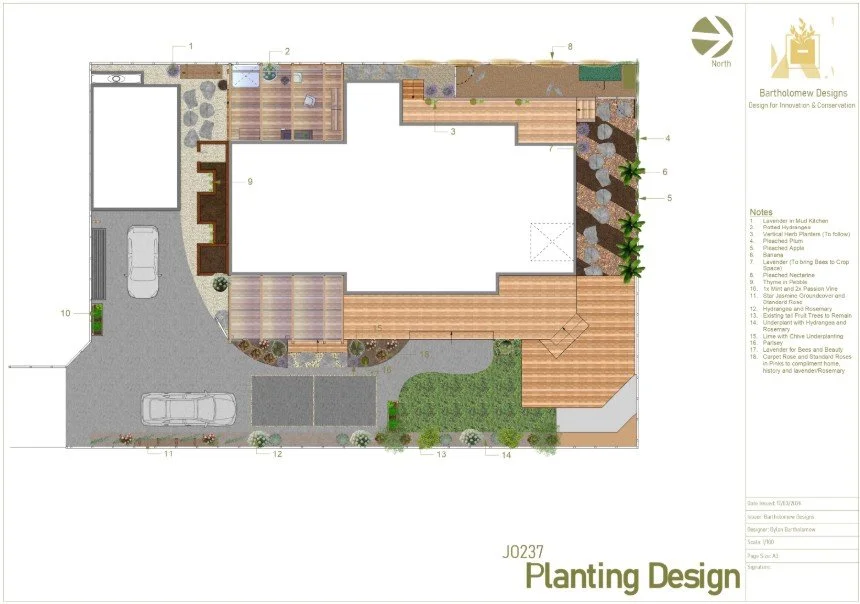
Dylan’s Landscape Plan + Garden Key
What working with a landscape designer actually looks like
Before this, we didn’t fully understand what the process would involve.
Here’s how it worked for us:
1. Site visit & listening
Dylan came out, walked the property, took measurements, and spent time understanding how we live, what we care about, and what we’re trying to build.
2. Concepts & layout thinking
He began mapping out how the space could function - not just where things fit, but where they make sense long-term.
3. CAD drawings & 3D renders
This was a big moment for us.
Seeing the space visualised properly helped everything click. It moved from “ideas in our heads” to something tangible.
4. Feedback & iteration
This wasn’t a one-way process.
We questioned things. Pushed back. Changed our minds. Explored alternatives.
5. Refinement into a working plan
Through that back-and-forth, the design evolved into something we could actually move forward with.
The surprising thing we learnt about good design
One of the most interesting ideas Dylan shared with us was this:
The best outcomes don’t come from choosing between option A or option B.
They come from sitting in the tension long enough to create a better option C.
We saw this play out again and again.
Washing line vs growing space
One of the best growing areas on our property… is also where the washing line currently sits.
So what do you prioritise? Drying clothes easily? Or maximising food production?
At first it felt like a straight trade-off. But through conversation, we started exploring more creative ways to approach it.
Garden mounds vs planter boxes
In-ground garden beds are fantastic for soil health and productivity.
But raised planter boxes offer protection - especially when you’ve got chickens and (soon) curious little hands running around.
Again, it wasn’t about picking one.
It was about understanding the strengths of both, and designing something that worked with our lifestyle.
Compost placement vs daily life
Compost needs to be accessible.
But not too close to the kitchen… unless you want to deal with flies and smells.
Small decisions like this have a big impact on how a space actually feels to live in.
What we realised through all of this is that good design isn’t just about making something look nice.
It’s about making it work - for real life.
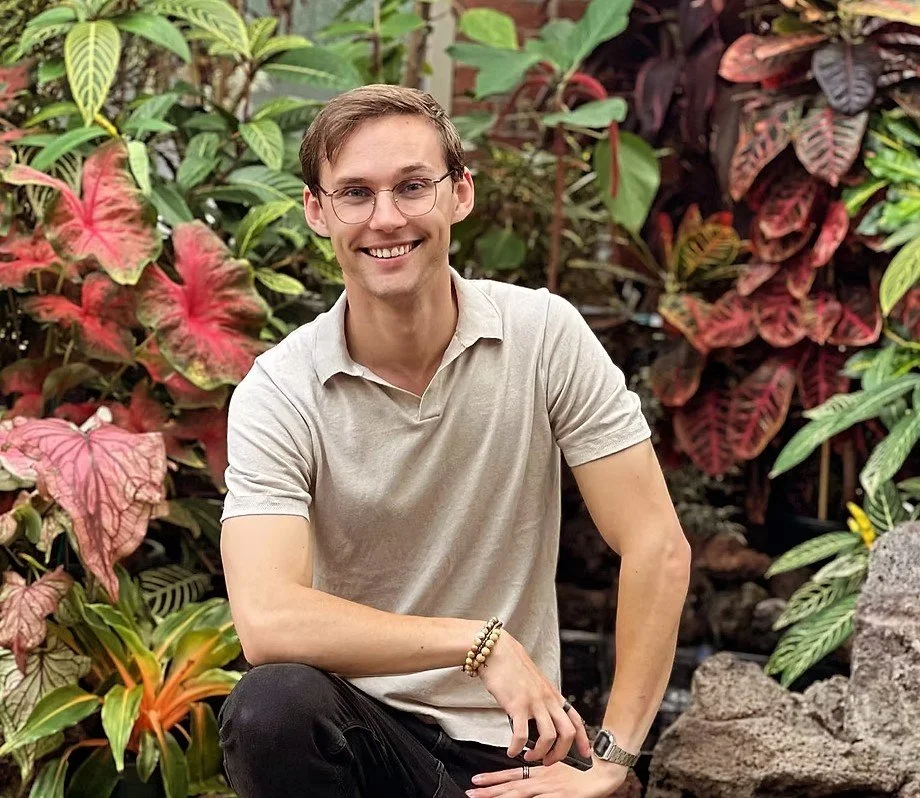
This is Dylan… lovely chap.
The human side of it all
This part matters more than we expected. We ended up having Dylan and his partner over for lunch one day, just chatting through ideas and getting to know each other. And honestly, that trust piece makes a huge difference. Because you’re not just hiring someone to draw something up. You’re inviting them into your space, your routines, your future plans.
What we appreciated most was:
he listened properly
he challenged us when needed
he respected that the final decisions were ours
It felt collaborative. Not transactional.
Watch the full design reveal
This was the moment it all came together for us.
🎥 In the video below, Dylan walks us through the full 3D design and layout of our Suburban Homestead.
You’ll see:
how the space has been mapped out
the key decisions we worked through
our real-time reactions to it all
Why we’d recommend doing this early
If you’re thinking about reworking your outdoor space, starting a garden, or creating something similar to what we’re doing…
Our honest take is:
Bring someone in earlier than you think you need to.
It will:
save you time
prevent costly mistakes
help you make better long-term decisions
give you clarity when things feel overwhelming
Even if you don’t follow every recommendation…
Having someone help you think it through properly is incredibly valuable.
Working with Dylan
If you’re based in New Zealand and looking for help with your outdoor space, we’d genuinely recommend reaching out to Dylan.
He offers:
landscape and garden design
CAD and 3D visualisation
planting plans and consultation
hands-on implementation
Follow along with the Suburban Homestead Project
This is just the beginning for us.
We’ll be documenting the full journey as we bring this design to life - the wins, the mistakes, and everything in between.
If you want to follow along (or are thinking about doing something similar yourself):
FAQs - Planning your garden or outdoor space
Do I need a landscape designer for my garden?
Not always - but if your project involves multiple elements (food growing, layout changes, structures, long-term planning), it can make a huge difference in getting it right from the start.
What does a landscape designer actually do?
They (should) help plan your outdoor space holistically - considering layout, light, soil, usability, aesthetics, and long-term function. Many (like Dylan) also offer implementation support.
Is it worth the cost?
In our experience, yes. Especially when you factor in the cost of mistakes, rework, and time.
Can I still be involved in the design?
Absolutely. The best outcomes come from collaboration - your ideas, combined with their experience.
What should I think about before starting a garden project?
Sun and shade
Water access
Soil quality
How you’ll actually use the space
Maintenance over time
Trade-offs between function and aesthetics