Travelling Northland In Winter With A One-Year-Old: Our First Motorhome Adventure With Wilderness
At the time of writing this, I'm pregnant with our second child, and our daughter Orchard has just turned one. Life is busy. Wonderful, but busy.
We know that once our next baby arrives, spontaneous adventures will become a little harder for a season. So when the opportunity came up to spend nearly two weeks exploring Northland in a Wilderness motorhome, it felt like the perfect chance to squeeze in one more family adventure before life changed again.
Neither Tim or I had ever travelled in a motorhome before. And if I'm honest, I wasn't entirely convinced travelling New Zealand in winter with a one-year-old was going to be particularly relaxing.
As it turns out, I was wrong…
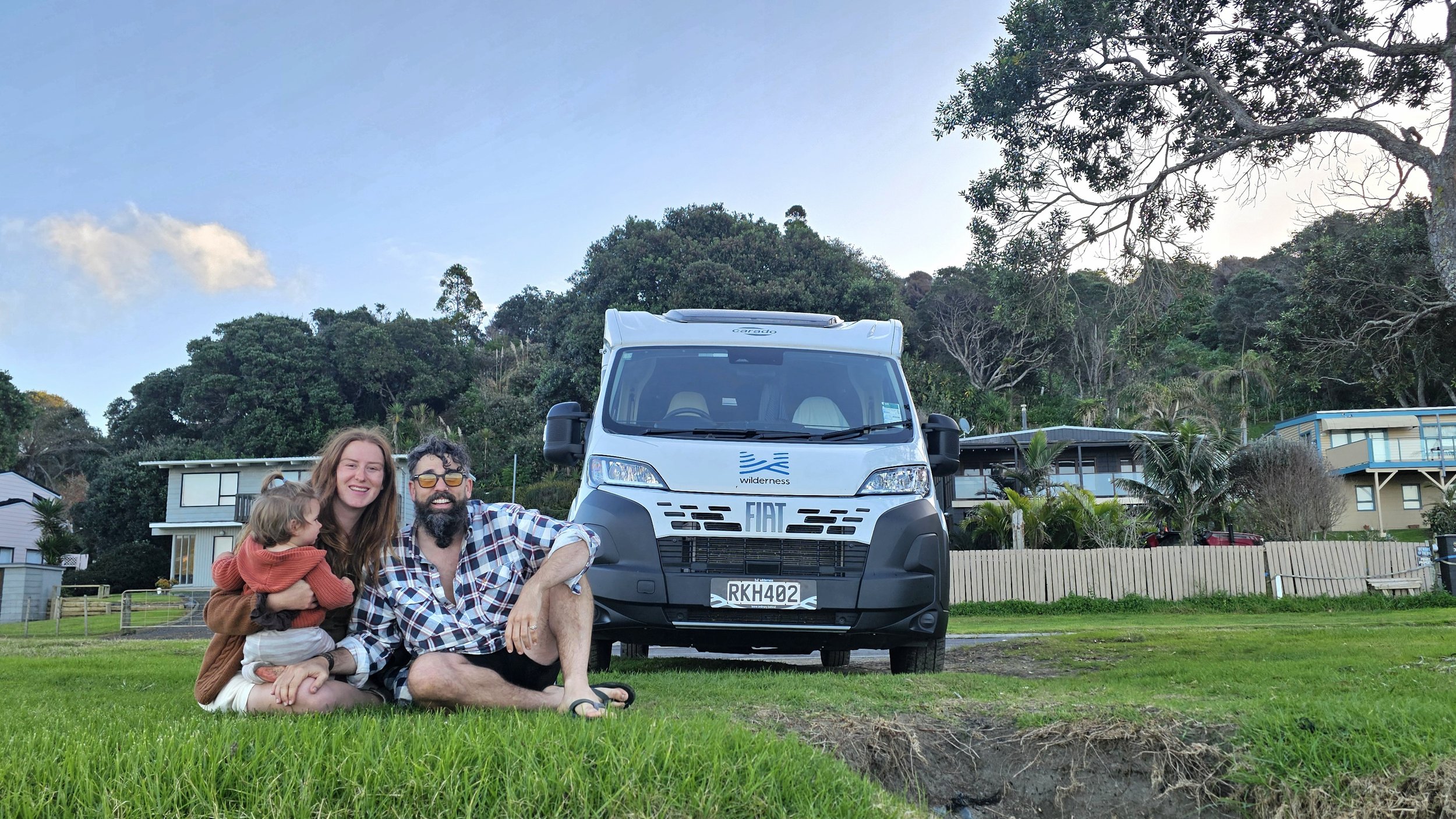
Why We Chose a Motorhome
One of the biggest appeals of travelling this way was the simplicity. Instead of packing and unpacking every night, everything travelled with us.
Orchard's toys. Her books. Her clothes. Her sleep space. Our kitchen. Our bed. Our food. Everything had a place.
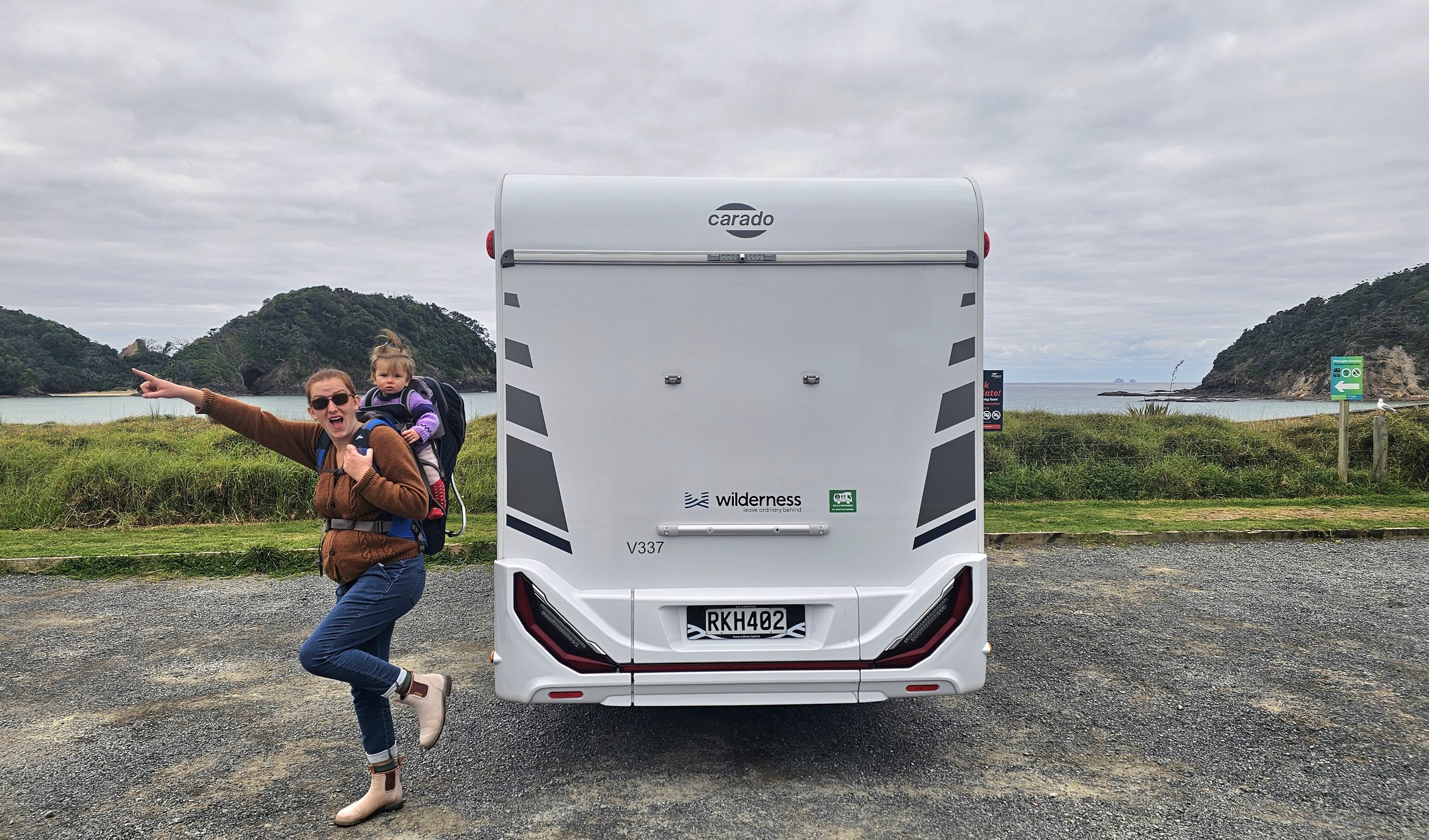
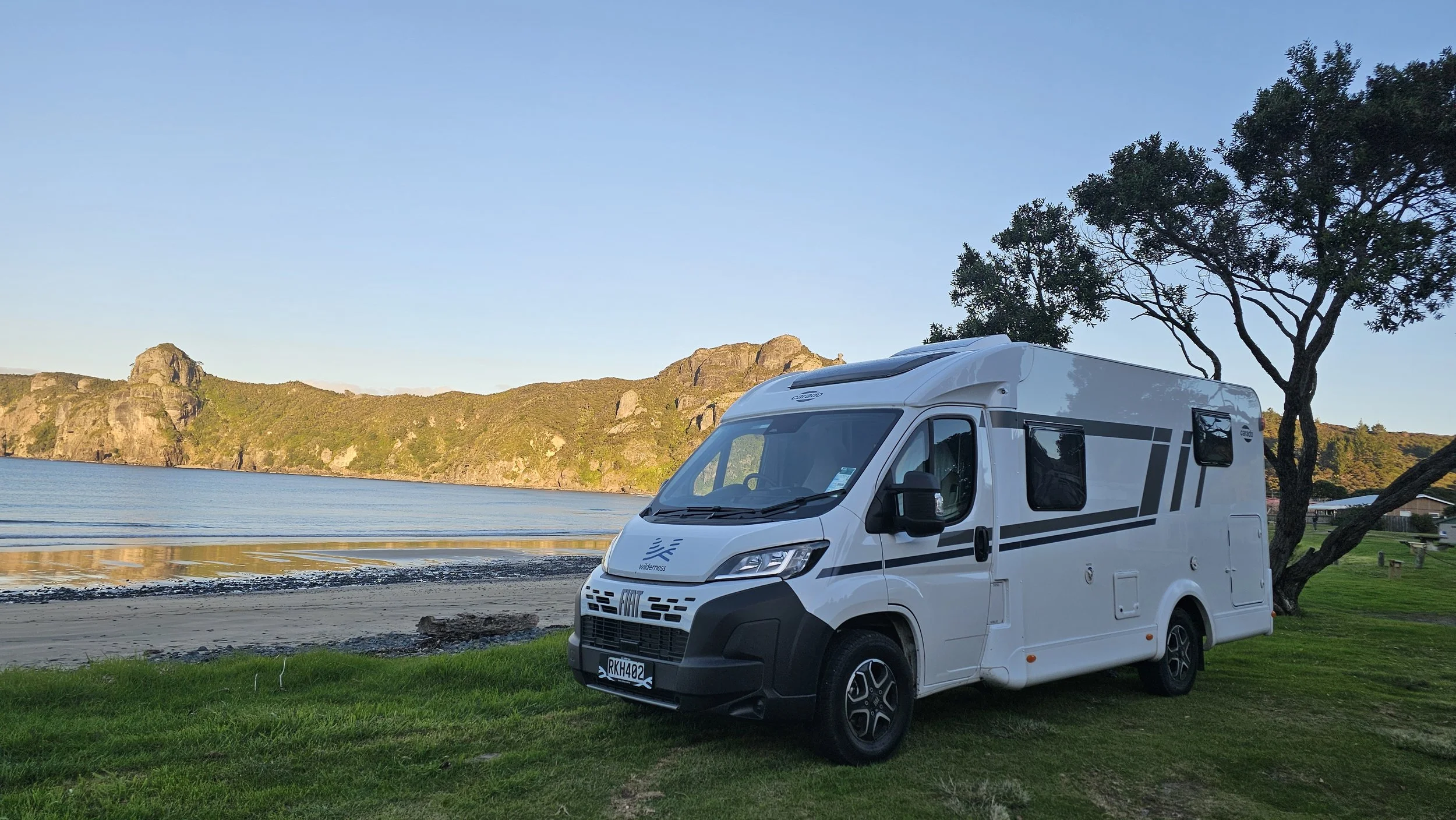
As parents, that familiarity mattered more than I expected. Orchard quickly became comfortable in the space because it remained consistent, even when the scenery outside changed every day. The motorhome itself was surprisingly spacious too. The rear garage storage area comfortably held our travel pram and all the extra gear that comes with travelling as a family. We noted that cyclists could easily fit bikes back there as well.
Most importantly, we weren't constantly thinking about logistics - like lugging our stuff into an Airbnb every night. We could simply focus on being together.
Slowing Down in Northland
Over 13 days we travelled 1,089 kilometres through Northland. Not because we were trying to cover as much ground as possible. Quite the opposite.
One of the things I appreciated most about travelling this way was how it encouraged us to slow down.
We spent time in Ruakākā, Marsden Point, Whangārei, Matapōuri, Cable Bay, Rarawa, Taupō Bay, Kerikeri, Whananaki and Waipū.
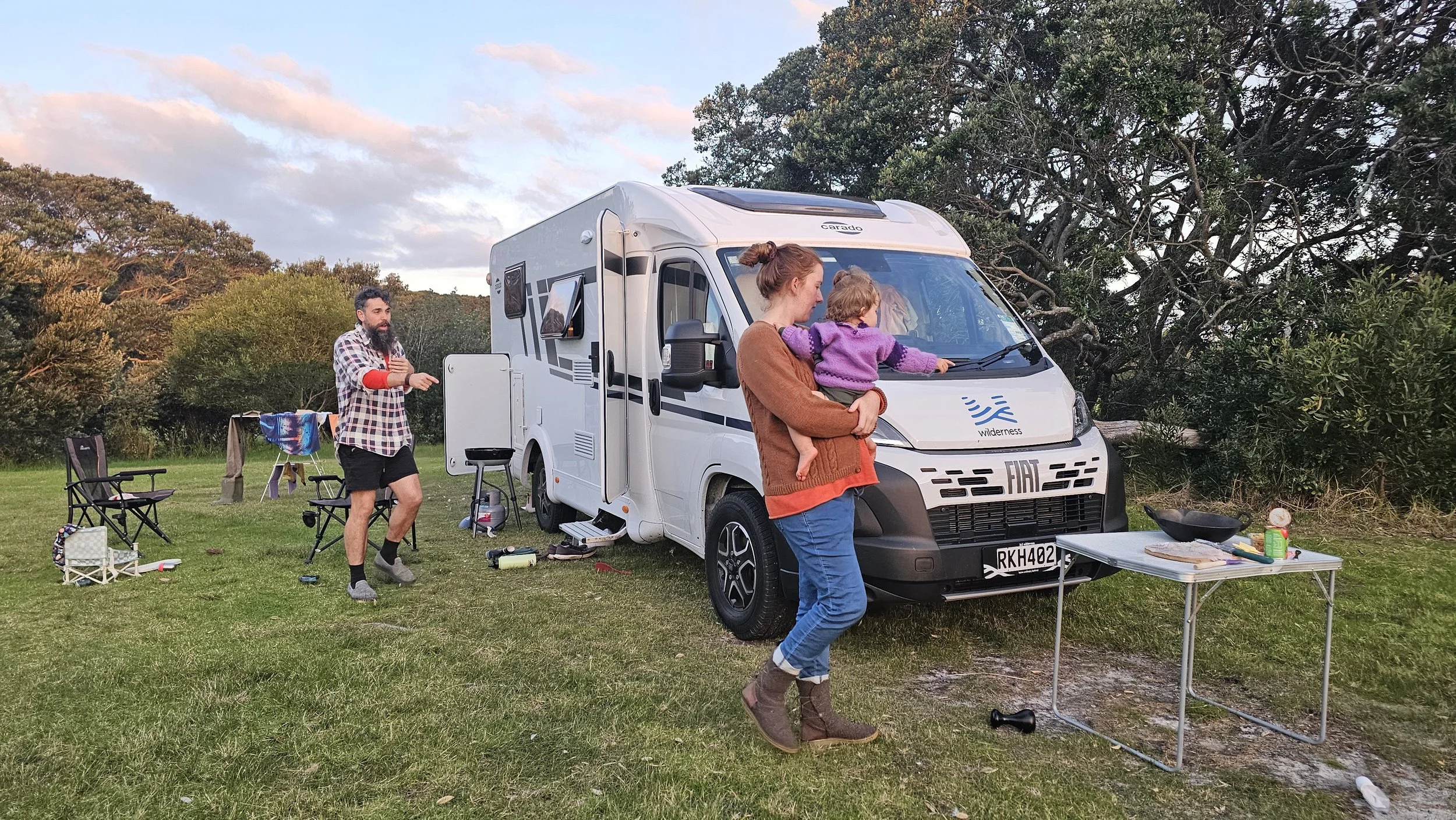
Some nights we stayed with friends. Other nights we stayed in campgrounds or freedom camping spots. Because it was winter and off-peak season, we rarely felt pressured to rush anywhere. We could stay longer when we found somewhere beautiful and move on when we felt ready.
That flexibility ended up becoming one of our favourite parts of the trip.
Our Favourite Places
While every stop had something special about it, a few places stood out.
Matapōuri
Matapōuri was probably our favourite.
The beach felt wild and spacious, even though it was surprisingly accessible. Tim spent time fishing while Orchard and I walked over to Whale Bay.
The water was beautiful, the scenery was stunning, and there were very few people around.
It felt like one of those places that reminds you how lucky we are to live in New Zealand.
Rarawa
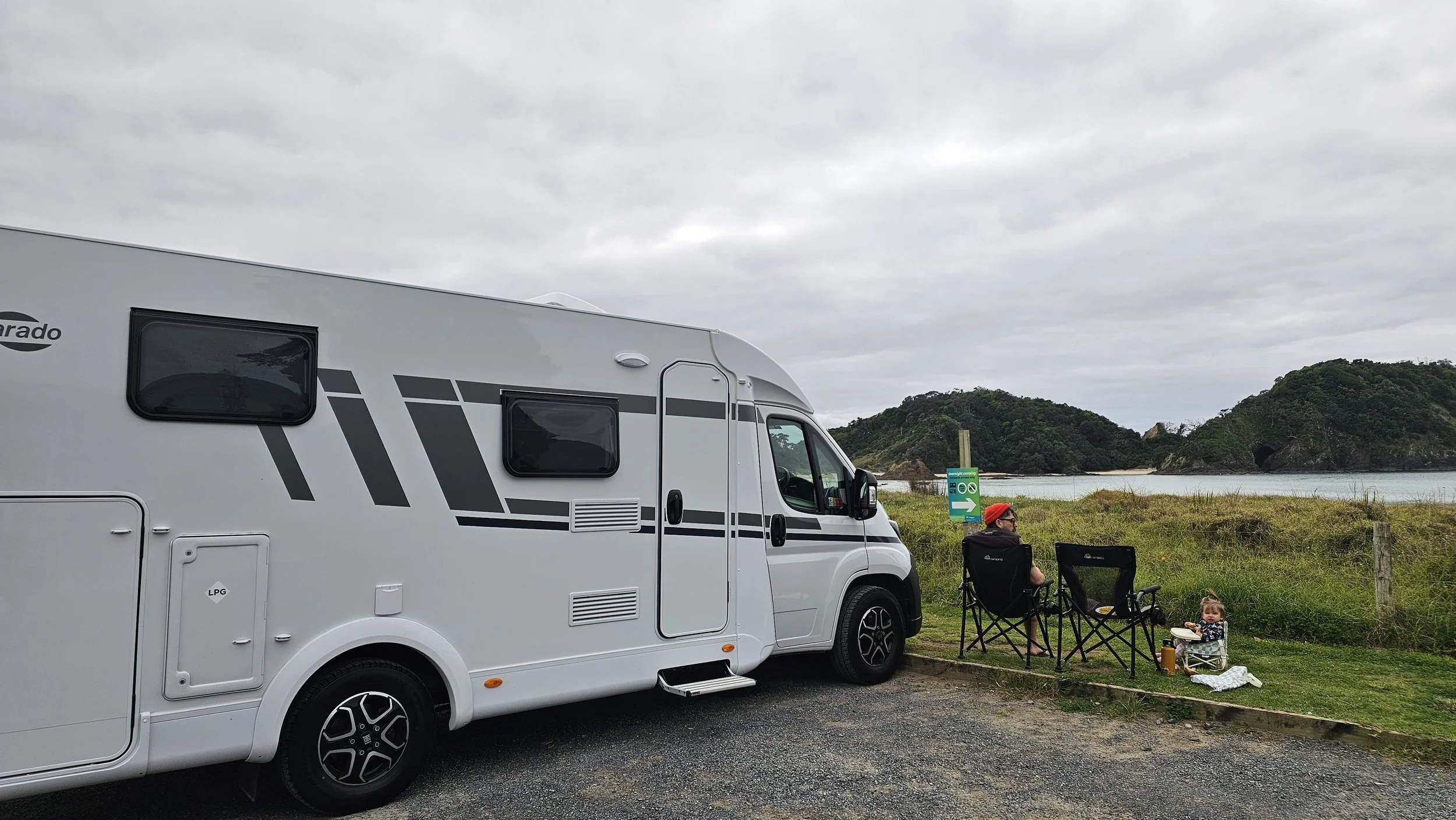
Rarawa gave us one of our most memorable moments.
On our first night there, we had the entire campground almost to ourselves.
Nearby was a colony of shags nesting along the stream. We spent ages simply sitting beside the water watching the birds while Orchard looked on in complete fascination. It was one of those simple moments that probably wouldn't make it into a tourism brochure, but ended up becoming one of our favourite memories of the entire trip.
Ironically, Rarawa also gave us one of the hardest moments.
One night Orchard was clearly uncomfortable, likely because she was teething. She wanted to feed almost constantly and barely slept. Being pregnant and exhausted, I found myself wondering what on earth we were doing.
But that's parenting.
Sometimes the hard moments and the beautiful moments exist in exactly the same place.
The next day ended up being wonderful.
Taupō Bay
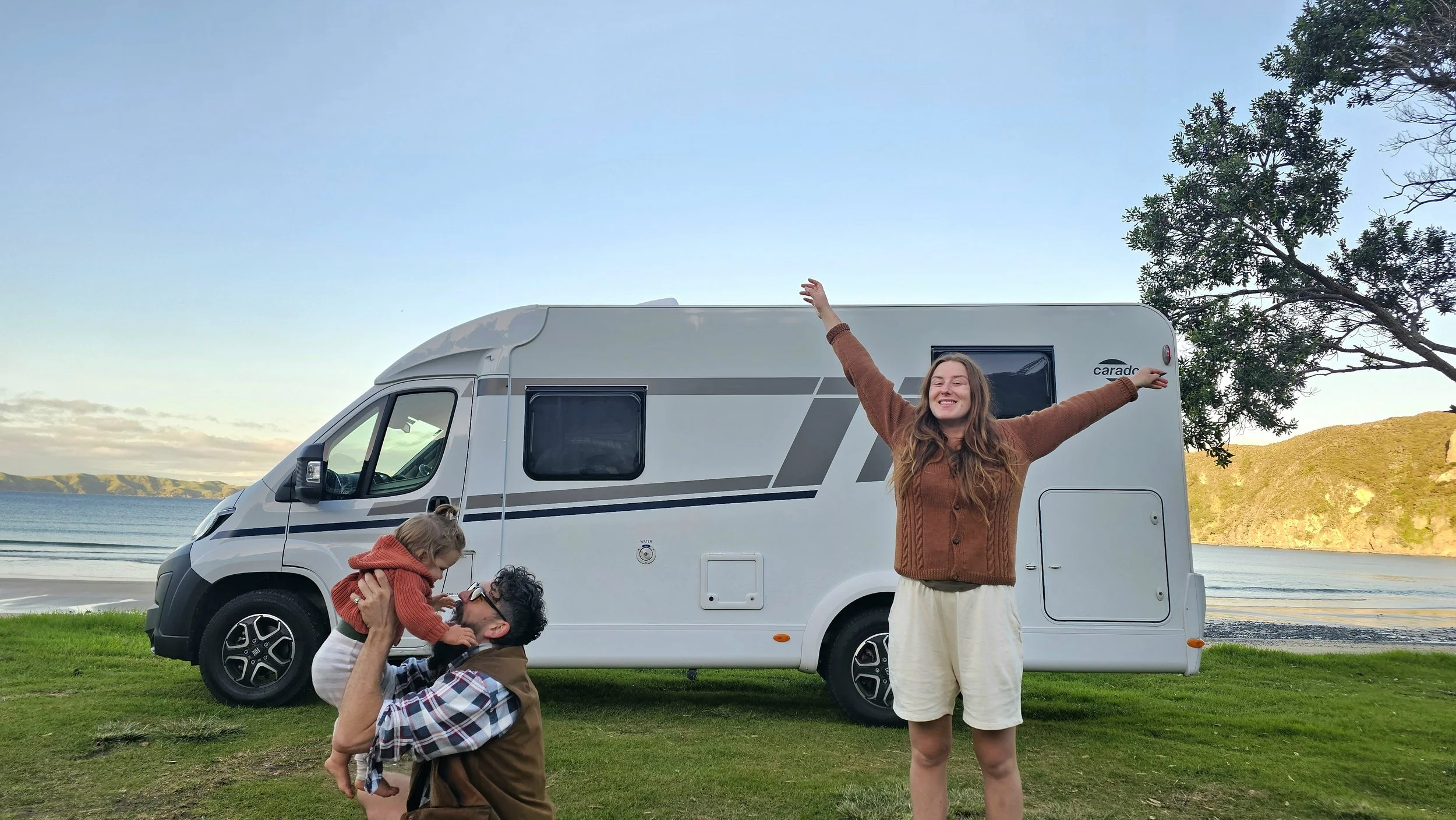
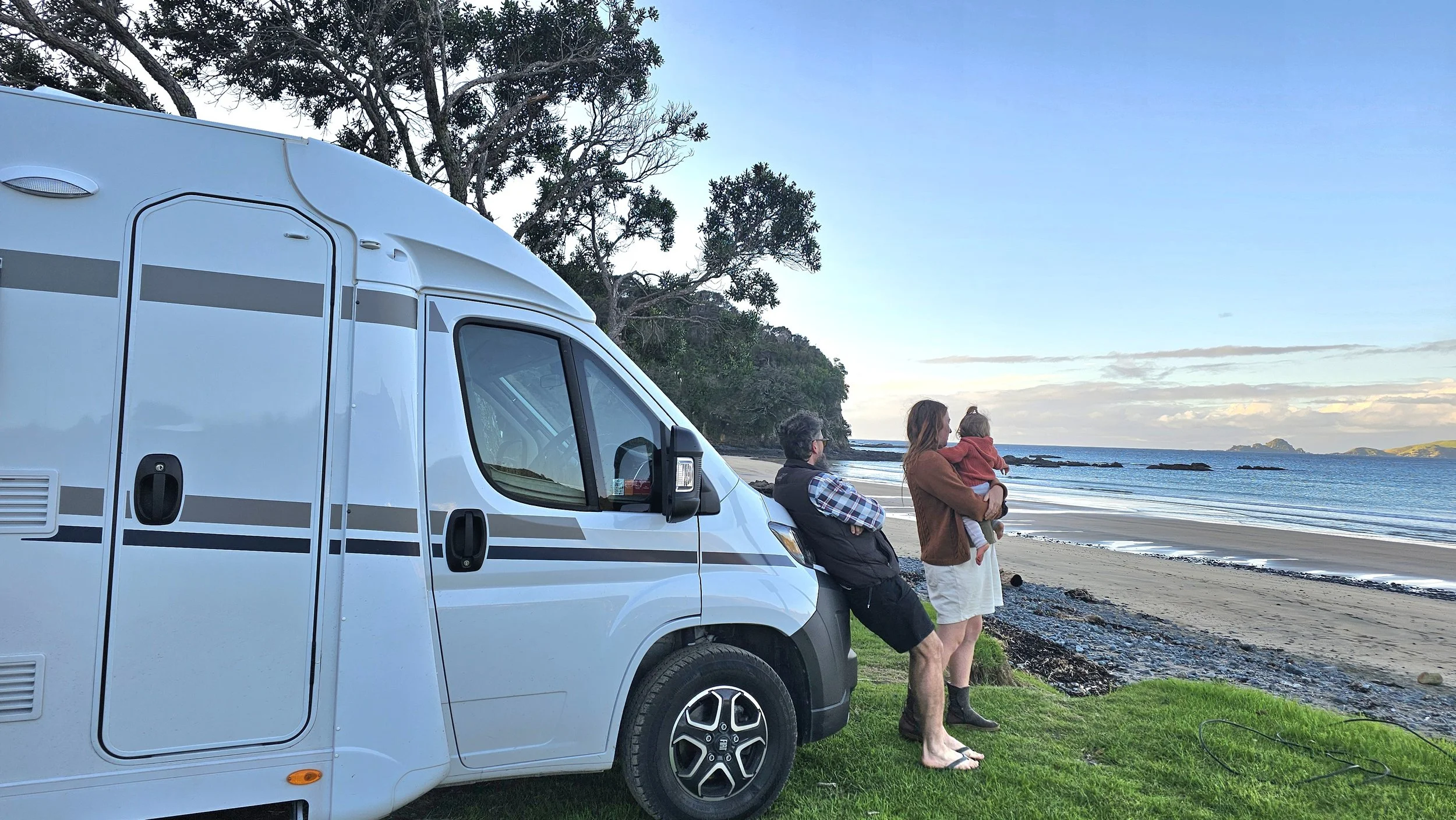
Taupō Bay was another standout.
It had been recommended to us by multiple people before we left and it absolutely lived up to expectations.
Like many places we visited, it felt slower, quieter and less crowded than we'd expected.
Travelling with a One-Year-Old
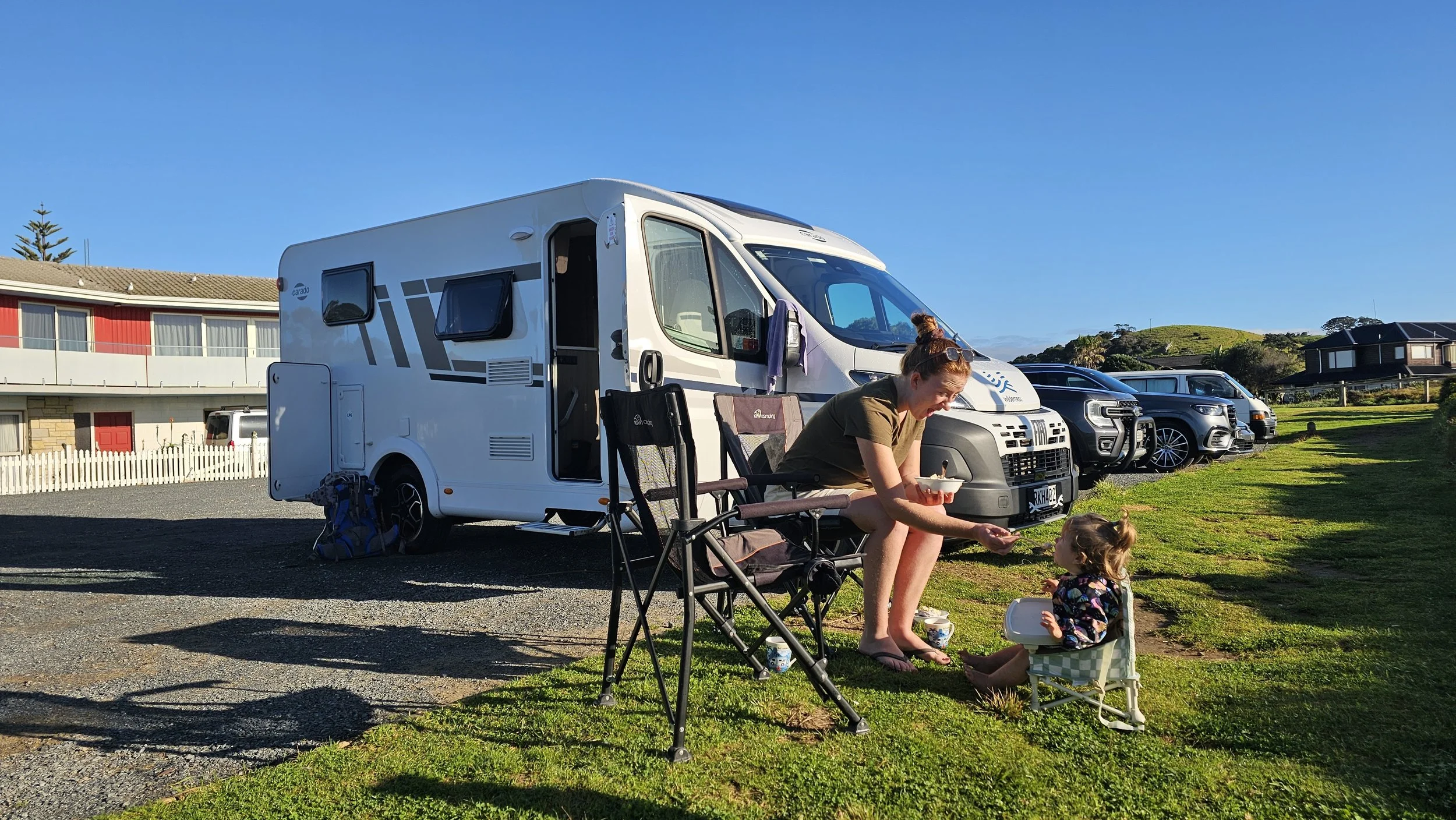
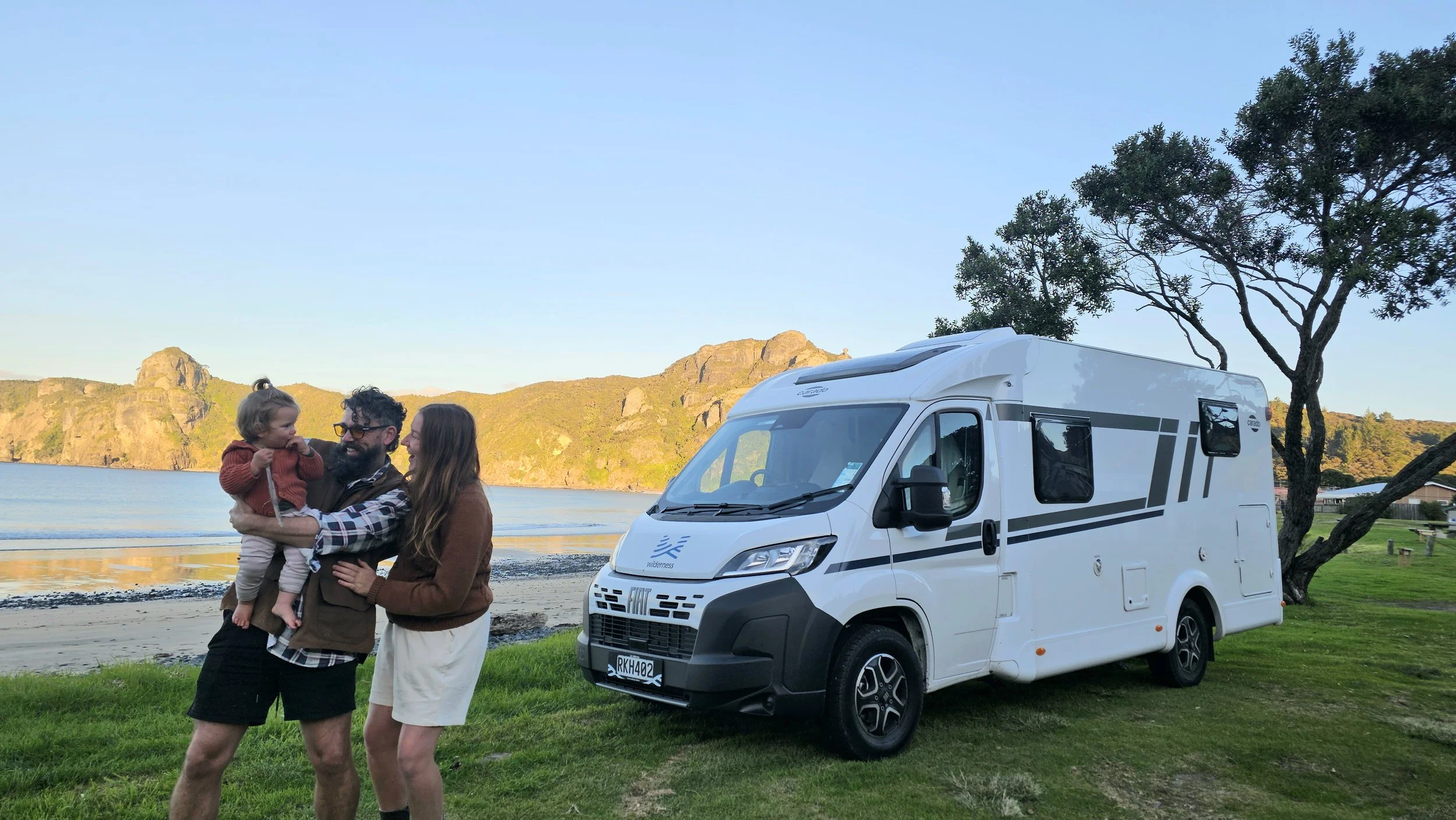
One of the questions we received most often was about travelling with a toddler in a motorhome. The reality is that it worked far better than we expected. Most of our driving happened around Orchard's naps. She wasn't always thrilled about being awake in the vehicle, so planning drives around sleep quickly became our secret weapon.
The other thing that helped enormously was having a proper setup for evenings. We could put Orchard to bed around 7pm and then retreat to the rear sleeping area to read, work on our laptops, chat or simply relax. It felt a little like having separate rooms, which was a huge benefit.
Child safety is also something Wilderness takes seriously. Their motorhomes are equipped with certified rear passenger seats featuring three-point seatbelts, top tethers and ISOFIX anchor points. They provide Britax child restraints, model-specific installation guidance and staff training to ensure installations are completed correctly. As first-time motorhome travellers, that attention to detail gave us confidence.
More Than Just a Motorhome Company
A fair question some people might ask is: Why would a sustainability-focused family choose to work with a motorhome company?
It's a reasonable question. Motorhomes are not a simple sustainability conversation. They still rely on fossil fuels. Our trip alone used $284 worth of diesel.
There is an environmental footprint. But one of the reasons we were interested in Wilderness specifically is because they don't pretend otherwise.
Wilderness recently became one of New Zealand's first B Corp certified motorhome companies. For those unfamiliar, B Corp certification is an independent certification that assesses how a business performs across governance, workers, community, customers and environmental impact.
The median business scores around 50 points. Wilderness achieved 82.6.
What stood out to me wasn't perfection. It was intentionality. Their certification process led them to formalise climate targets, strengthen staff wellbeing programmes, invest in native forest regeneration, improve waste reduction systems and build stronger accountability into how they operate.
There are also lots of smaller examples that travellers may never notice. For example, the dishwashing liquid provided in each motorhome comes from Will & Able, a social enterprise that employs people with disabilities. Rather than replacing bottles each trip, they operate a refill system to reduce waste.
Small decisions like that probably won't change the world on their own. But hundreds of small decisions, throughout the company, add up.
What We Appreciated About Wilderness
As first-time motorhome travellers, customer support mattered. When we picked up the vehicle, the Wilderness team spent significant time walking us through how everything worked. We never felt rushed. The day after departure they even called to check everything was going smoothly and answer any questions. We didn't need to use their 24/7 support line, but knowing it existed provided reassurance.
We also appreciated their transparent pricing model. Unlike many travel bookings where extra fees appear throughout the process, Wilderness operates with a more all-inclusive approach. Their flexible booking policy is also among the most generous we've seen, allowing travellers far greater flexibility than many traditional motorhome operators.
The Bigger Lesson
If there's one thing this trip reminded me of, it's that travel doesn't always need to be bigger to be better.
We swam at beaches.
We ate meals outside.
We watched birds.
We caught fish.
We met kind strangers.
We spent time with friends.
And we slowed down.
In a world that constantly encourages us to do more, see more and squeeze more into every holiday, there was something refreshing about doing the opposite.
Would We Do It Again?
Absolutely.
In fact, we're already talking about where we'd go next. Perhaps the South Island. Perhaps Queenstown and Wānaka - somewhere completely different to Northland!
If you're considering a New Zealand motorhome holiday, particularly as a family, I'd encourage you to take a look at Wilderness.
Not because they're perfectly sustainable, but because they're asking thoughtful questions, making meaningful improvements and encouraging a style of travel that allows people to slow down and connect more deeply with the places they're visiting.
You can learn more about Wilderness Motorhomes and book your next holiday here.
Frequently Asked Questions
Is a motorhome holiday in New Zealand suitable for families with young children?
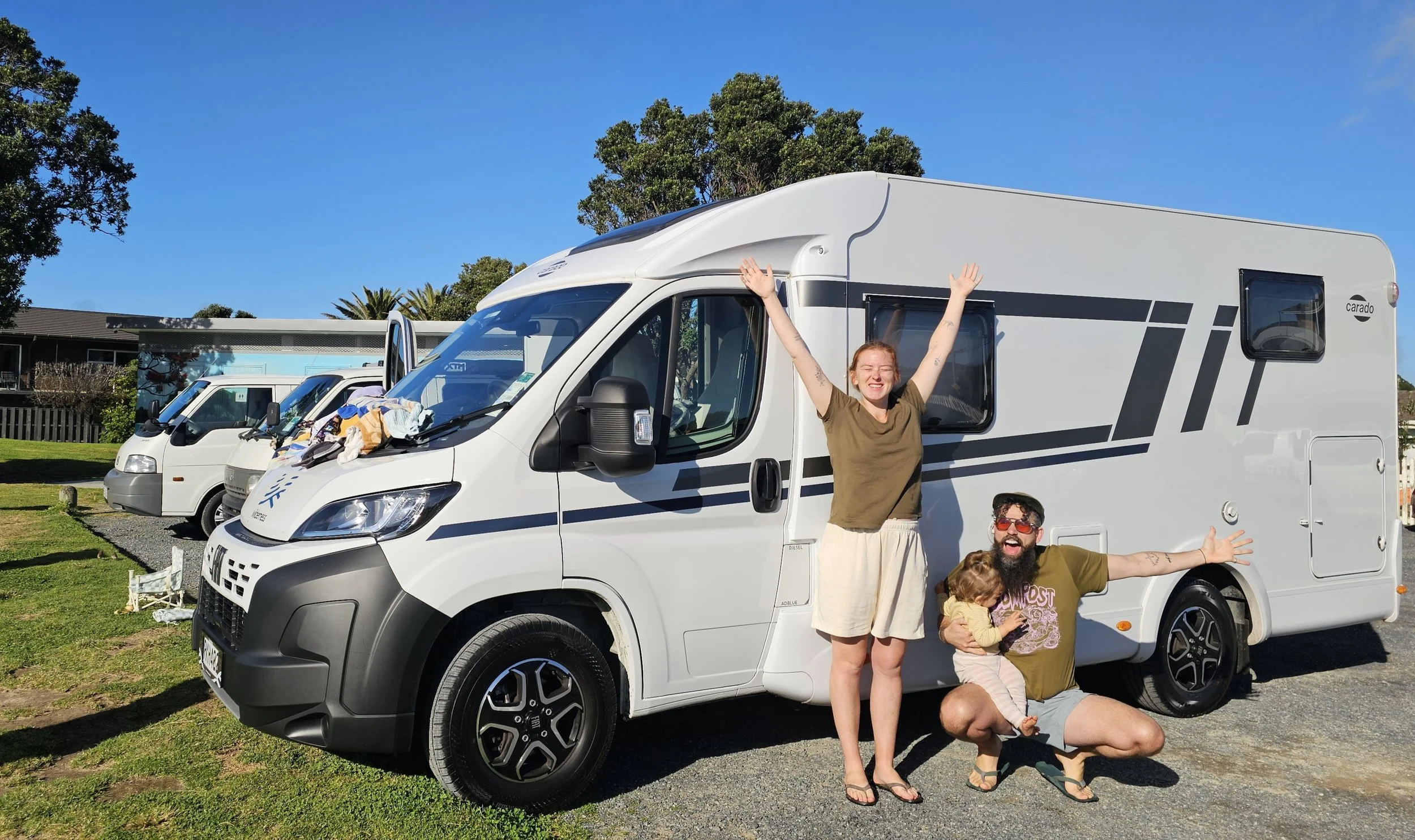
Absolutely. Before this trip, we weren't sure how travelling with a one-year-old in a motorhome would work, but it ended up being surprisingly family-friendly. Having Orchard's bed, toys, clothes and familiar routines with us wherever we went made travel much easier than constantly packing and unpacking between accommodation.
Wilderness motorhomes also offer certified child restraint options, ISOFIX anchor points, top tether systems and trained staff to ensure child seats are installed correctly.
What does B Corp certification mean for a motorhome company?
B Corp certification is an independent assessment of how a business performs across areas like environmental impact, staff wellbeing, governance, community impact and customer experience.
For Wilderness, it means they're actively measuring and improving their impact rather than simply making sustainability claims. They achieved a verified B Corp score of 82.6, significantly above the average business score of around 50.
Are motorhomes sustainable?
It's a nuanced question.
Motorhomes still rely on fuel and have an environmental footprint. Wilderness openly acknowledges this reality. What impressed us was their focus on improving the areas they can control today; including fleet longevity, waste reduction, supplier choices, carbon reduction targets, staff wellbeing and encouraging travellers to drive less and stay longer.
For us, sustainability is often less about perfection and more about continuous improvement. We like to give our readers options and for those wanting a motorhome experience, Wilderness is the most sustainable motorhome option to choose.
Does Wilderness Motorhomes have hidden fees?
No. One of the things Wilderness is known for is its transparent, all-inclusive pricing model.
Unlike some travel bookings where additional charges appear later in the process, Wilderness includes the essentials upfront so travellers have greater clarity around the true cost of their trip.
What is Wilderness Motorhomes' cancellation policy?
Wilderness offers one of the most flexible booking policies we've seen in the motorhome rental market.
Travellers can cancel up to 7 days before departure (or 21 days during peak season), whereas many operators require much longer notice periods or charge additional fees for flexible booking options.
It's a policy that gives travellers extra confidence when planning a New Zealand road trip.
What support is available while travelling?
Wilderness provides 24/7 customer support throughout your journey.
Even before we left, the team spent plenty of time walking us through the motorhome and answering questions. We also received a follow-up call after departure to make sure everything was running smoothly.
Knowing expert support is available around the clock adds an extra layer of confidence, especially for first-time motorhome travellers.
What are the best places to visit in Northland by motorhome?
Some of our personal favourites from this trip were Matapōuri, Whale Bay, Rarawa and Taupō Bay.
What we loved most wasn't necessarily ticking off attractions, but having the flexibility to stay longer when we found somewhere special. That's one of the biggest advantages of travelling Northland by motorhome.
Why choose a motorhome holiday instead of hotels or Airbnbs?
For us, the biggest advantage was flexibility.
We could change plans easily, stay longer in places we loved, cook our own meals, carry everything with us and travel at Orchard's pace rather than working around accommodation bookings.
It encouraged a slower style of travel that felt more connected, less rushed and surprisingly relaxing.