
How Tempdrop Helped Me Understand My Fertility (And Conceive Both of My Babies)
My journey to Tempdrop (an amazing medical device that helps you with contraception or conception) actually started years before I ever wanted to have a baby.
Back in 2018, I started questioning the contraception methods I was using. I'd been on the contraceptive pill for several years and while it worked well for me (not the story for many others!), I found myself wondering whether there were options that better aligned with my values.
At the time, I was becoming increasingly conscious of waste and consumption. One thing that bothered me was the amount of plastic packaging that came with taking the pill every month. It sounds small, but once you start paying attention to the waste generated by everyday products, it's hard to stop noticing it.
So I started exploring alternatives.
For a year, I used the contraceptive implant that sits in your arm. It was convenient and relatively low-maintenance, but during that time I also read Lara Briden's book Period Repair Manual. The book completely changed the way I thought about women's health and hormones. For the first time, I began learning about what was actually happening in my body throughout my cycle and realised that, personally, I wanted to see how my body functioned without hormonal contraception. I wanted to ovulate; which doesn’t happen when you’re on hormonal contraception.
That led me to stop using hormonal contraception altogether.
Condoms became our contraceptive method of choice. While they certainly aren't waste-free, it became more important to me to understand and work with my body's natural cycles than to avoid every piece of waste. Like many sustainability decisions, it wasn't about finding a perfect option. It was about finding the option that felt most aligned with my priorities at the time.
A few years later, the conversation shifted entirely.
Instead of trying to avoid pregnancy, Tim and I were trying to conceive.
Unfortunately, the journey wasn't straightforward. In 2021 I experienced a miscarriage and in 2023 I experienced an ectopic pregnancy. Both losses were incredibly difficult and left me feeling frustrated, heartbroken, and increasingly aware of how little I actually understood about my own fertility.
By 2024, having a baby felt much further away than I'd imagined.
I knew I needed to do something different.
One of the biggest misconceptions about conception is that if you're hoping for a baby, you simply need to have sex regularly and eventually it will happen. Yes, sex is what makes a baby, but the reality is that women are only fertile for a relatively small window during each cycle. If you don't know when you're ovulating, it's surprisingly easy to miss that window altogether.
I realised that if I wanted to give myself the best chance of conceiving, I needed to understand my cycle better.
That's when I started learning fertility awareness, specifically the Sympto-Thermal method, with Emily from Phase Fertility and began tracking my biomarkers, including my basal body temperature. I gained two things out of working with Emily: awareness of my cycle and an amazing friendship (we have been mates since May 2024!). Emily is an accredited fertility educator and she taught me how to interpret the natural biomarkers that occur throughout a woman's cycle. Things like cervical mucus, cervical sensations, and basal body temperature can tell us an enormous amount about what's happening hormonally throughout the month. Gosh I wish this stuff was taught in mainstream education spaces like schools. Some people think these natural methods of contraception aren’t effective or lead to unplanned pregnancies, but it’s quite the oppostie. The Sympto-Thermal method, when used correctly, has an efficacy percentage of 99.6%!
So after working with Emily, at first I used a traditional thermometer to track my basal body temperature.
What Is Basal Body Temperature?
One of the main biomarkers I started tracking was my basal body temperature.
Basal body temperature (often shortened to BBT) is your body's lowest resting temperature. Throughout a menstrual cycle, hormones cause subtle but predictable changes in that temperature. Before ovulation, temperatures tend to sit lower. After ovulation, progesterone causes them to rise slightly and remain elevated until either your period arrives or pregnancy occurs.
This creates what fertility awareness educators call a biphasic chart. In simple terms, there are usually two distinct temperature phases throughout the cycle: a lower-temperature phase before ovulation and a higher-temperature phase afterwards. Tracking this shift helps confirm that ovulation has occurred.
For many women, that information is incredibly valuable. Whether you're trying to conceive, trying to avoid pregnancy naturally, or simply wanting to understand your body better, knowing whether and when ovulation has occurred can provide a huge amount of clarity.
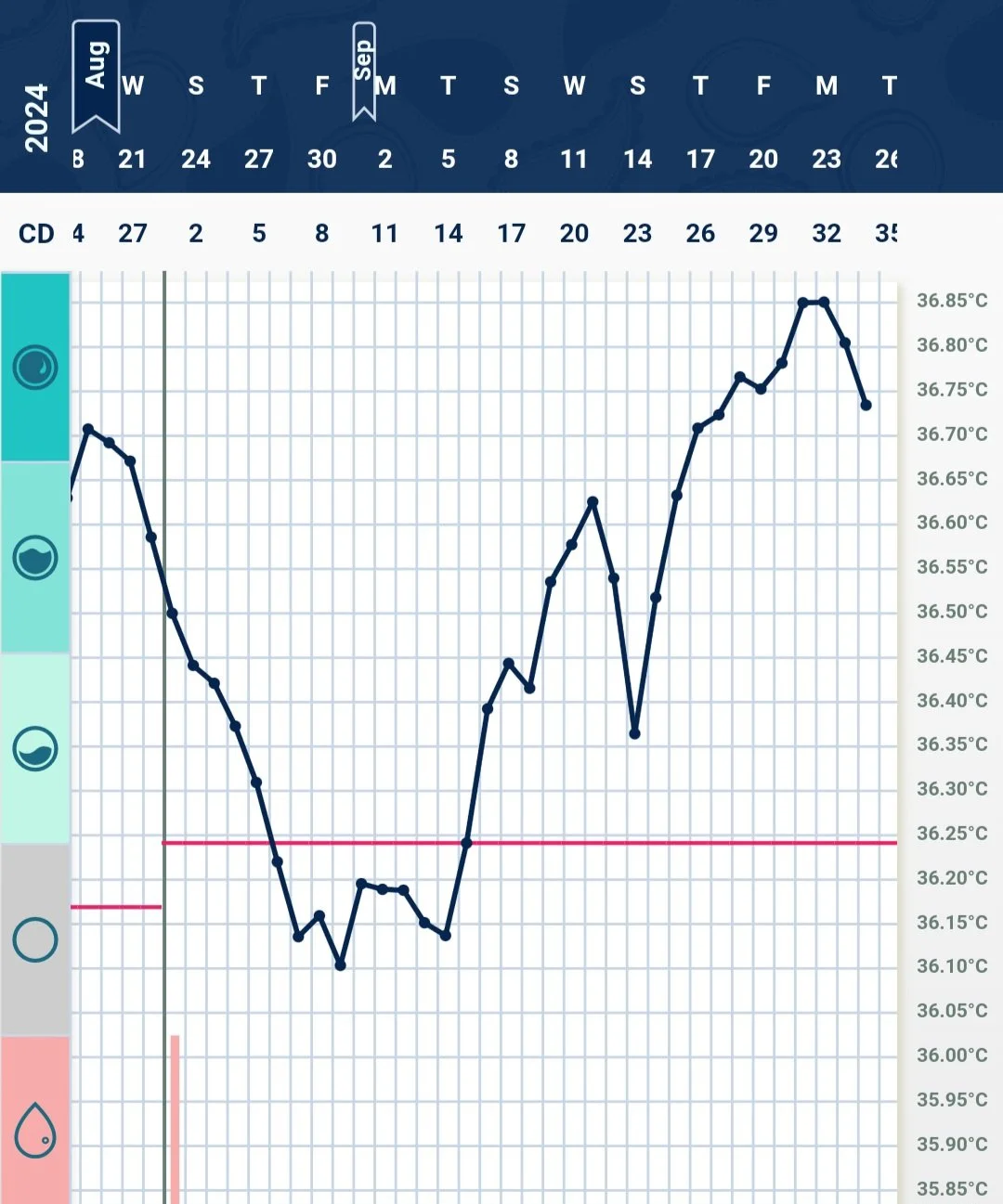
This is an example of my temperatures when I conceived Orchard. You can see lower temperatures then a distinct rise around day 14 - indicating ovulation.
Why I Started With a Thermometer
Like many people, I began with a traditional basal thermometer.
Every morning I would wake up, place the thermometer under my tongue, and take my temperature before getting out of bed. To get the most accurate readings, you're ideally meant to take your temperature at roughly the same time each day, after a similar amount of uninterrupted sleep.
It worked. But it was also surprisingly easy to get wrong.
If I woke at 4am to use the bathroom and then went back to sleep, that could affect the reading. If I slept poorly, travelled, woke unusually early, or simply forgot to take my temperature before getting out of bed, that could affect the reading too.
The method itself wasn't flawed. Life just isn't always consistent.
And if you're a parent, doing shift work, travelling frequently, or simply sleeping unpredictably, maintaining that level of consistency can be difficult.
That's what eventually led me to Tempdrop.
Why Tempdrop Was a Game Changer
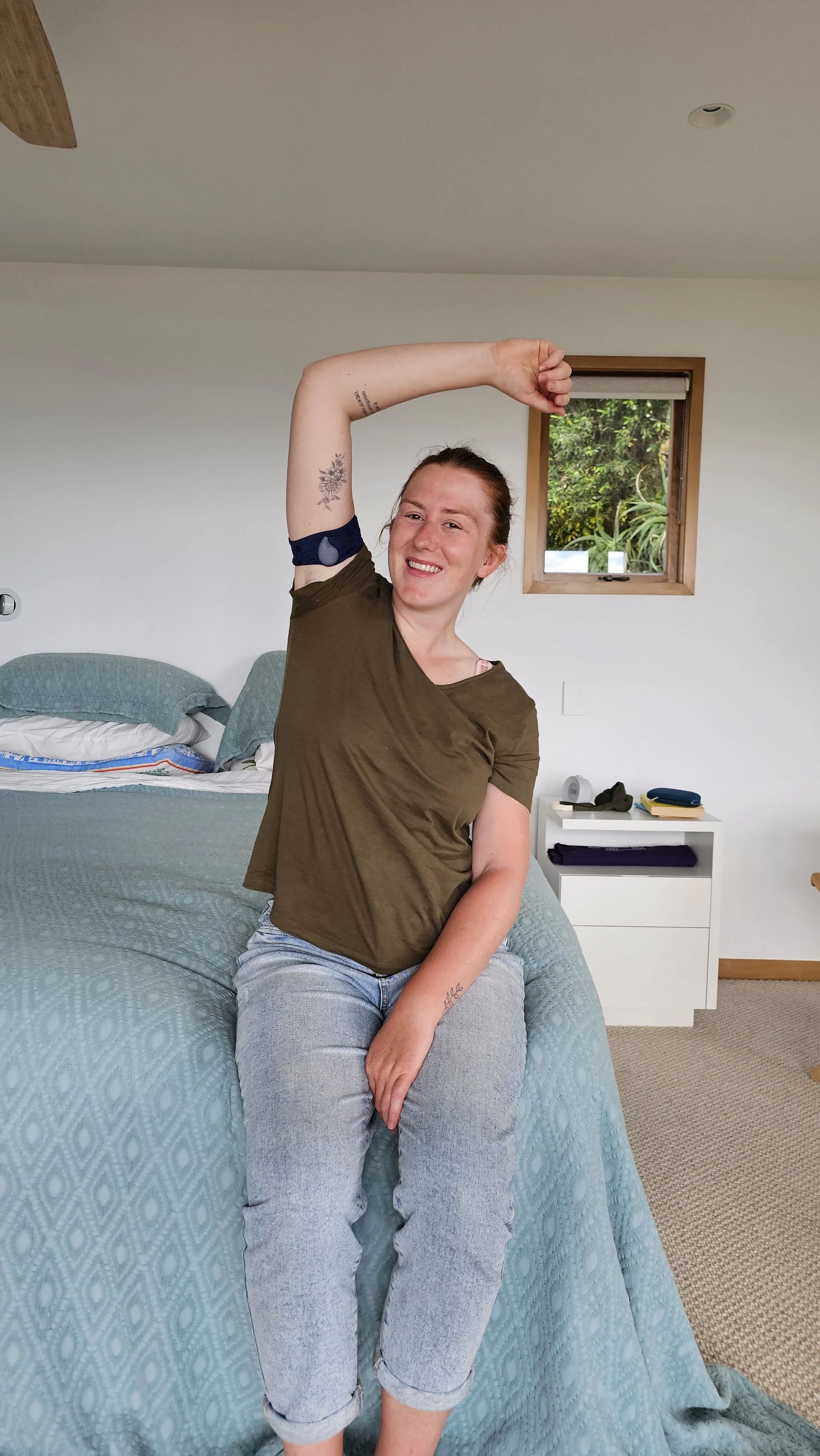
Tempdrop is a wearable device that sits comfortably on your upper arm while you sleep. Rather than relying on a single temperature reading each morning, it collects temperature data throughout the night and uses an algorithm to determine your true resting temperature.
For me, it removed almost all of the friction from temperature tracking.
I no longer had to remember to reach for a thermometer the second I woke up. I didn't have to worry about sleeping in, waking early, or accidentally invalidating a reading because I'd gotten up to use the toilet during the night.
One feature I particularly appreciated was that Tempdrop didn't require me to sleep with my phone beside me or use Wi-Fi or Bluetooth while on my arm. I don't keep my phone in the bedroom and generally try to minimise technology around me while I sleep. Tempdrop simply collects the information overnight and syncs later when you're ready.
The result was more accurate and more consistent charting with significantly less effort.
How Tempdrop Helped Me Conceive
Back in 2024 I was trying to conceive after two losses. Tempdrop didn't magically make me pregnant, but it did give me confidence that I actually understood what my cycle was doing.
For the first time, I could clearly identify my ovulation patterns and confidently recognise my fertile window. Instead of relying on guesswork, I had evidence that ovulation had occurred and could see where I was in my cycle.
A few months later, I conceived Orchard.
Of course, fertility is complex and many factors contribute to conception, but having accurate information about when I was actually ovulating made a huge difference to my confidence and understanding throughout the process.
Using Tempdrop Postpartum
Once I became pregnant, I stopped using Tempdrop because I no longer needed it and didn’t have a cycle. After our daughter, Orchard, was born, when I got my first period back approximately 7 or 8 months postpartum, I started using it again.
Rather than showing a clear biphasic pattern, my temperatures were bouncing around all over the place. High. Low. High again. Low again.
It became obvious that although I'd had a bleed, my cycle still wasn't behaving consistently.
Then one month something changed.
My temperatures remained low for a period of time before suddenly rising. This time they stayed elevated. Day after day. Week after week.
I kept expecting them to drop and signal an approaching period, but they never did.
That sustained temperature rise was one of the first clues that I might be pregnant again.
And sure enough, I was.
That's the pregnancy we're currently affectionately calling Squid - we always hoped for a small age gap between our children but after it took so long to have our first, we thought it wasn’t possible. Yipee!
Why I Recommend Tempdrop
One thing I always tell people is that Tempdrop is a tool, not a teacher.
You still need to understand what your biomarkers mean and how to interpret them correctly. That's why I highly recommend working with a qualified fertility awareness educator such as Emily from Phase Fertility rather than relying solely on apps (DO NOT use free apps! They do not work!) or internet advice.
But as a tool, I genuinely think Tempdrop is brilliant.
It's reusable, low-waste, easy to use, and removes many of the challenges that come with traditional temperature tracking. It works particularly well for parents, shift workers, travellers, and anyone whose sleep schedule isn't perfectly predictable.
Most importantly, it helps women better understand their own bodies.
Whether you're hoping to conceive, avoid pregnancy naturally, or simply gain a deeper understanding of your cycle, body literacy is one of the most empowering things I've ever learned.
Interested In Trying Tempdrop?
If you've been curious about fertility awareness or are looking for a more reliable way to track your basal body temperature, I highly recommend checking out Tempdrop.
Use my discount code AFETHICALLYKATE to save 15% on your purchase.
Shop Tempdrop HERE.